
A Study on Drainage Management as a Flood Disaster Mitigation Effort in Waisai District, Raja Ampat Regency
Article Sidebar
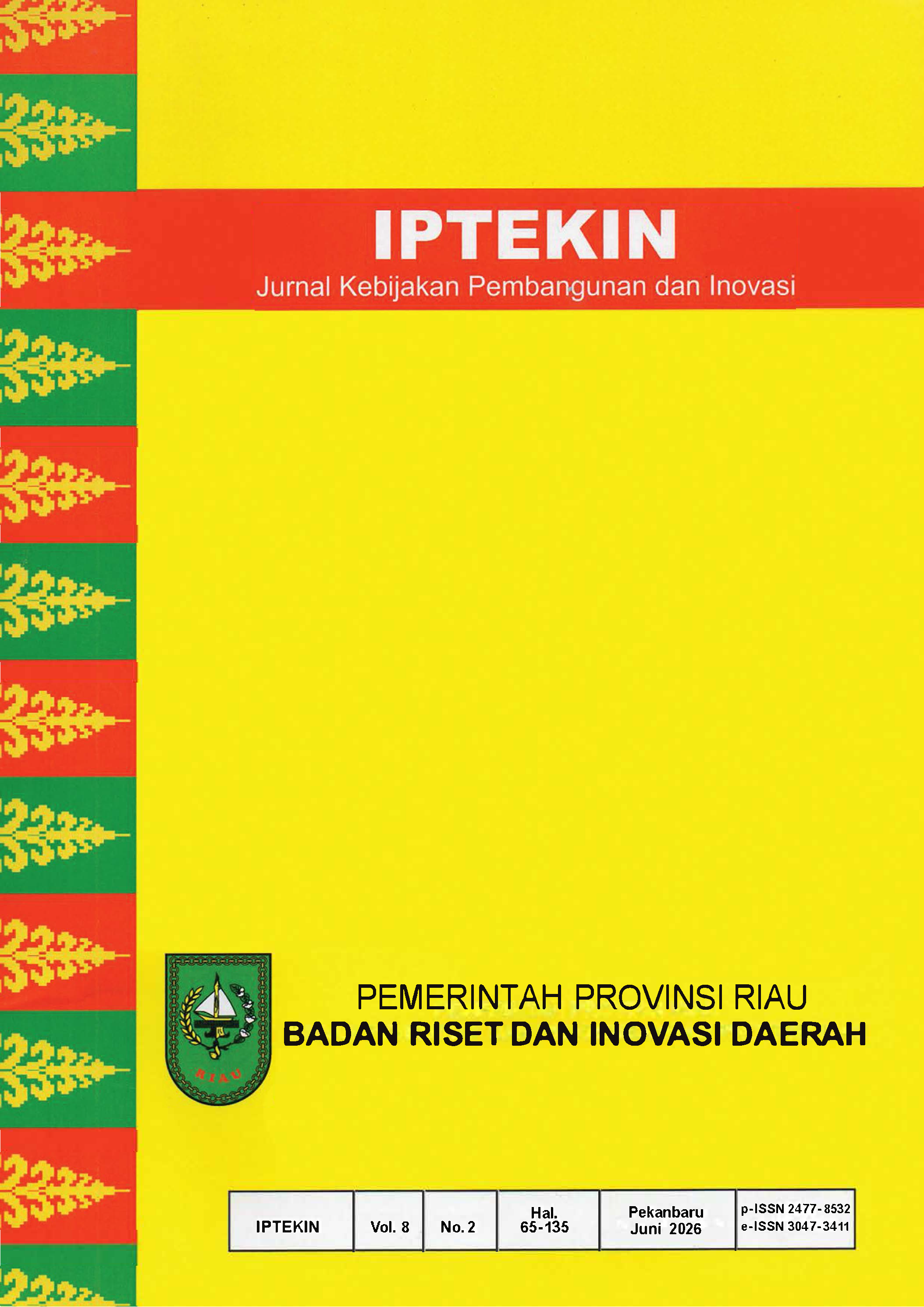
Main Article Content
Abstract
As the administrative center of Raja Ampat Regency, Waisai District is highly susceptible to recurrent flooding and urban inundation, which significantly disrupt the socio-economic activities of the community. Inundations reaching depths of 50–100 cm persist for several hours in specific locations on a near-annual basis during the rainy season, severely restricting public mobility. This study aims to evaluate the existing drainage system, identify the factors driving the degradation of drainage performance, and design an effective drainage management strategy to mitigate flood risks within the vulnerable areas of Waisai District. A mixed-methods approach (qualitative and quantitative) was employed, utilizing descriptive analysis and the SWOT method. Data were primarily collected through field observations and stakeholder interviews. The findings indicate that rapid urban development in Waisai has outpaced adequate and integrated drainage planning, leading to suboptimal channel capacities, particularly during high-intensity rainfall. The degradation of drainage functionality is predominantly driven by technical factors, alongside environmental and social aspects. The recommended approach lies within the WO (Weaknesses-Opportunities) quadrant, which emphasizes leveraging external opportunities—such as Waisai's status as a regency capital and a prominent marine tourism destination—to improve the capacity of government institutions in urban drainage planning and maintenance, as well as fostering community collaboration to address existing weaknesses. This research is expected to provide valuable insights for local governments in coastal urban areas in formulating policies for sustainable drainage management and disaster resilience.
Article Details

This work is licensed under a Creative Commons Attribution-ShareAlike 4.0 International License.
References
Dwianti, N., Mawardin, A., & Kurniati, E. (2023). Pengaruh sedimentasi terhadap fungsi kapasitas saluran drainase di Jalan Tongkol Kelurahan Seketeng Sumbawa Besar. Journal of Applied Civil Engineering and Infrastructure Technology, 4(2), 11–18.
Fadel, I. (2023). Evaluasi sistem drainase sebagai upaya penanggulangan banjir di daerah Youtefa, Kota Jayapura [Tesis magister, Universitas Islam Indonesia].
Ginting, A. (2020). Strategi penanganan banjir berbasis mitigasi bencana pada kawasan rawan bencana banjir di daerah aliran sungai Seulalah Kota Langsa. Geography Science Education Journal, 1(1).
Djamaluddin, I., Aly, S., Rahim, I., Zubair, A., Ibrahim, R., & Abdullah, N. (2020). Pengelolaan Drainase Kota Sebagai Upaya Mitigasi Banjir Kota Makassar. JURNAL TEPAT : Teknologi Terapan Untuk Pengabdian Masyarakat, 3(2), 98-112. https://doi.org/10.25042/jurnal_tepat.v3i2.145
Kodoatie, R. J., & Sjarief, R. (2010). Pengelolaan banjir terpadu. Penerbit Andi.
Juliastuti, Y., Wihartono, T. K., Setyandito, O., Wijayanti, Y., Safitri, L., & Sebayang, I. S. D. (2023). The assessment of drainage performance in the residential area using SWMM. Sinergi, 27(2). https://publikasi.mercubuana.ac.id/index.php/sinergi/article/view/17725
Kementerian Pekerjaan Umum. (2014). Peraturan Menteri Pekerjaan Umum Nomor 12/PRT/M/2014 tentang Penyelenggaraan Sistem Drainase Perkotaan.
Maryono, A. (2017). Pengelolaan banjir berkelanjutan. Gadjah Mada University Press.
Nugroho, H. W., & Aryani, Z. U. (2025). Desain sistem drainase perkotaan sustainability dengan pendekatan saluran bertingkat dan grill sampah di Kota Pekanbaru. IPTEKIN Jurnal Kebijakan Pembangunan dan Inovasi, 7(2), 85–96. https://jurnal.riau.go.id/iptekin/article/view/132
Rahmawati, N., & Rachman, M. (2022). Analisis strategi pengelolaan drainase perkotaan menggunakan metode SWOT. Jurnal Teknik Sipil dan Lingkungan, 10(1), 45–54.
Rangkuti, F. (2019). Analisis SWOT: Teknik membedah kasus bisnis. Gramedia Pustaka Utama.
Renaldi, A., Arisanty, D., Muhaimin, M., Rahman, A. M., & Saputra, A. N. (2023). Erosion hazard levels in Padang Batung sub-district, Hulu Sungai Selatan regency, South Kalimantan province, Indonesia. Indonesian Journal of Earth Sciences, 3(1), Artikel 461. https://journal.moripublishing.com/index.php/injoes/article/view/461
Suripin. (2004). Sistem drainase perkotaan yang berkelanjutan. Penerbit Andi.
Wenda, A. (2023). Mitigasi bencana banjir di kawasan Sungai Kemiri, Distrik Sentani [Tugas akhir, Universitas Sains dan Teknologi Jayapura].
Wibisono, W. (2019). Strategi penataan ruang berbasis mitigasi bencana berdasarkan tingkat kerentanan dan bahaya banjir rob di Kota Bandar Lampung. Jurnal Dialog Penanggulangan Bencana, 11(1), 51–65.
Zakya, I. H. S., & Harahap, H. (2015). Dampak banjir terhadap kondisi ekonomi dan kesehatan keluarga: Studi kasus di Kelurahan Sri Meranti dan Meranti Pandak Pekanbaru. IPTEKIN Jurnal Kebijakan Pembangunan dan Inovasi, 1(1), 49–57. https://jurnal.riau.go.id/iptekin/article/view/109/80